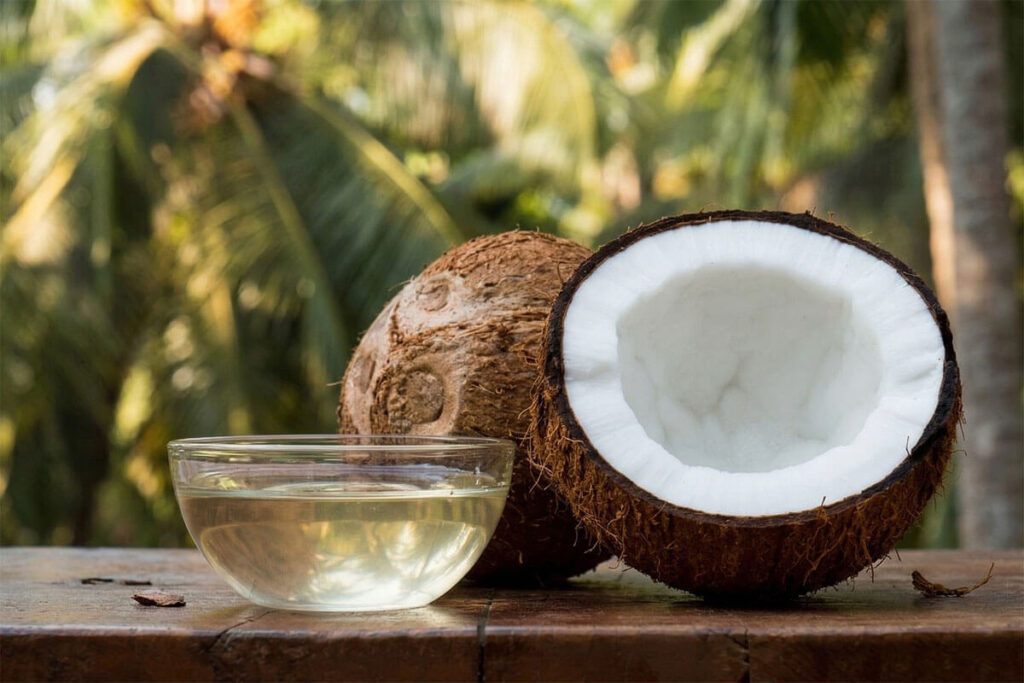
Coconut oil has been part of my nutritional toolkit for many years, and MCT oil — specifically for gut health and energy — has become one of my most consistent recommendations. Pure MCT oil is a concentrated, liquid extract that is more rapidly absorbed and more precisely dosed than standard virgin coconut oil. Here is what you need to know about it, why it is different, and how it can support your digestive health and general wellbeing.
What Are MCTs and Why Do They Matter for gut health?
Medium chain triglycerides are a type of fat found naturally in coconut oil and palm oil. Unlike the long-chain fatty acids found in most dietary fats, MCTs are metabolised differently. They bypass the normal fat absorption process and are sent directly to the liver, where they are rapidly converted into energy.
Pure MCT oil is typically composed of approximately 60% caprylic acid (C8) and 40% capric acid (C10). These are the two MCT fractions most readily converted into ketones — the fuel source the brain and body can use in place of glucose.
MCT Oil and Gut Health
One of the reasons I recommend MCT oil to many of my colonic clients is its role in supporting the intestinal environment. MCT oil carries antimicrobial properties, meaning it may help to manage problematic micro-organisms in the gut. These micro-organisms can contribute to conditions such as candida overgrowth, IBS, and Crohn’s disease.
For clients who have recently had a colonic and are working to restore a healthy digestive balance, MCT oil can be a useful addition to a broader nutritional programme. It is gentle on the digestive system and, crucially, does not require bile for absorption. Making it a good option for those with fat absorption difficulties.
Further Benefits Marijke Has Observed
In practice, and through my clients’ feedback over many years. MCT oil consistently shows up as beneficial in several areas beyond gut health:
Brain clarity and focus — the production of ketones from MCT metabolism crosses the blood-brain barrier and provides a direct energy source for the brain. Many clients report noticeably improved mental clarity when supplementing regularly.
Reduced sugar cravings — stable energy from ketone production appears to reduce the peaks and troughs in blood sugar that drive cravings for sweet foods.
Immune support — the caprylic and capric acids in MCT oil have well-documented antifungal and antibacterial properties that support general immune function.
Weight balance — MCT oil has thermogenic properties, meaning it may support the conversion of fat into energy and help maintain a healthy body weight without calorie restriction. Clinical studies have suggested that substituting MCT oil for other saturated fats may assist with healthy weight management. This is not a weight loss product — but it does support the conditions in which healthy weight is easier to maintain.
Skin and hair — I have seen it consistently in my clients, and in my own experience: regular MCT oil use improves skin tone and reduces scalp dryness and dandruff. Even my sceptical daughter became a convert when she noticed the difference in her hair and skin.
Exercise and energy — the pure MCT version I now recommend from Canada is liquid and rapidly absorbed. Making it particularly well suited for those with high physical demands or sustained endurance exercise. It supports ATP (adenosine triphosphate) production — the cellular energy currency — and helps preserve muscle tissue during exertion.
How to Take MCT Oil for Gut Health
Start with one teaspoon daily if you are new to it or have a sensitive digestive system, and build up to one tablespoon daily. Add to smoothies, coffee, or taken neat. It has a neutral flavour and blends easily.
MCT oil is not an essential fatty acid, so continue to include a good source of omega-3 in your diet. Krill oil or flaxseed oil both work well alongside it.
You can find MCT oil in good health food shops. I recommend sourcing a pure version that specifies its C8/C10 composition on the label, without additives. Water for Health in Scotland is one option for online purchase.
Complementing Your Colonic Programme
MCT oil works particularly well as part of the nutritional support I discuss with clients after their colonic session. If you are working on candida, IBS, sluggish digestion, or low energy, it is worth considering alongside your colonic programme. I am happy to discuss whether it is appropriate for you at your appointment.
You might also find these posts useful:
Book a Colonic in North London
If you would like to discuss your digestive health and what nutritional support might help call Marijke. I would love to welcome you to my practice at Balance On The Lane in Belsize Park.
Book a session with Marijke Vogel →
📞 Call or WhatsApp: +44 (0)7982 831239
Sessions from £175 · Belsize Park, London NW3 4TG
This content is for informational purposes only and does not constitute medical advice. Always consult your GP or healthcare provider before beginning any new supplement. Particularly if you have a diagnosed health condition or are taking medication.
About the Author Marijke Vogel is an ARCH-accredited colon hydrotherapist and CNHC-registered practitioner (CNHC04200). With over 25 years of experience in naturopathy, iridology, and herbal medicine. She practises at Balance On The Lane, 16 England’s Lane, Belsize Park, London NW3 4TG.