The relationship between minerals health digestion is fundamental yet often overlooked. Minerals are the building blocks of every cell in your body, the catalysts for thousands of enzymatic reactions, and the foundation of bone, muscle, nerve, and digestive function. Without adequate minerals, your body simply cannot work properly — no matter how well you eat or how many vitamins you take.
As a naturopath with over 25 years of clinical experience, I’ve seen countless clients transform their health simply by addressing mineral deficiencies. Chronic fatigue, digestive problems, poor immunity, brain fog, weak bones, and muscle cramps often improve dramatically when mineral balance is restored.
In this article, I’ll explain why minerals health digestion matters so profoundly, which minerals are essential at different life stages, and how modern farming practices have depleted the food supply — leaving many of us deficient despite eating seemingly healthy diets.
Minerals Health Digestion: Why They’re Essential
Minerals are inorganic elements that your body needs but cannot manufacture. You must obtain them from food, water, or supplements. Unlike vitamins, which can degrade with heat or light, minerals are stable — but that doesn’t mean they’re easy to come by in modern diets.
Minerals perform countless critical functions:
- Bone and tooth formation: Calcium, phosphorus, magnesium
- Nerve transmission: Sodium, potassium, calcium, magnesium
- Muscle contraction: Calcium, magnesium, potassium
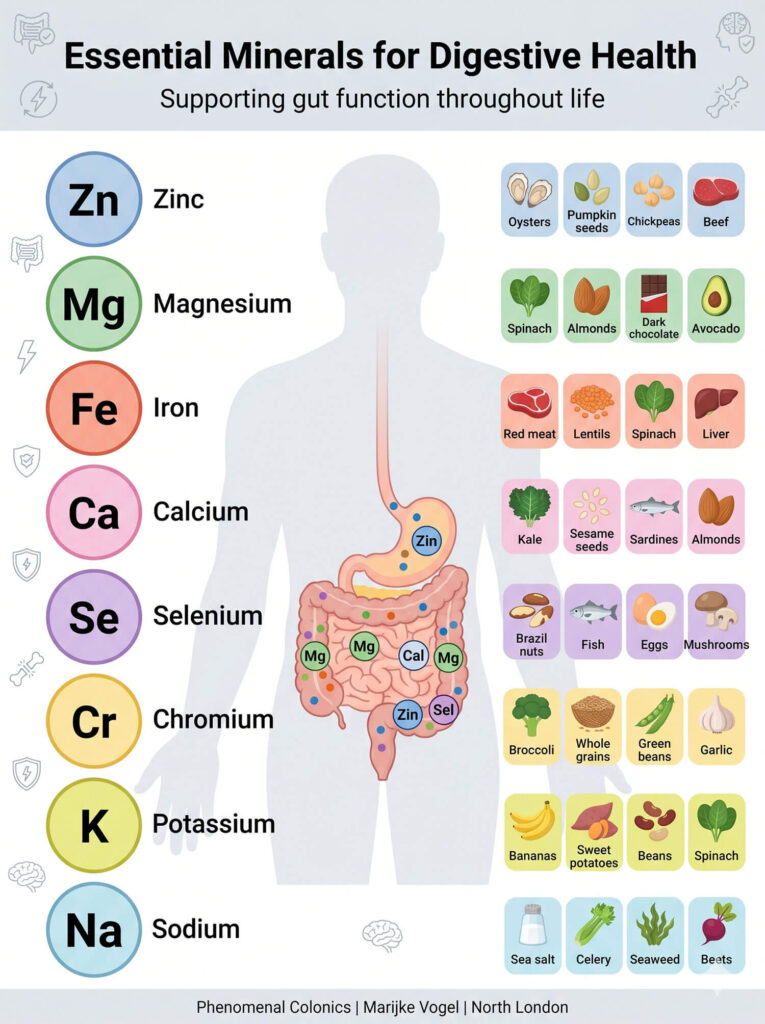
- Enzyme activation: Zinc, magnesium, manganese, selenium
- Oxygen transport: Iron
- Immune function: Zinc, selenium
- Blood sugar regulation: Chromium, magnesium
- Digestive enzyme production: Zinc, chloride
- Gut barrier integrity: Zinc, selenium
When any of these minerals are deficient, the corresponding functions deteriorate. This is particularly true for digestive health, where minerals are essential for producing stomach acid, digestive enzymes, and maintaining the gut lining.
How Minerals Health Digestion Connection Works: Deficiency Impact
The connection between minerals health digestion is bidirectional. Poor digestion impairs mineral absorption, and mineral deficiencies worsen digestive function — creating a vicious cycle.
Zinc and Digestive Function
Zinc is essential for producing stomach acid (hydrochloric acid) and digestive enzymes. Without adequate zinc, food isn’t broken down properly, leading to bloating, gas, and nutrient malabsorption. Zinc also maintains the integrity of the gut lining, preventing leaky gut.
Signs of zinc deficiency include poor appetite, loss of taste or smell, slow wound healing, frequent infections, and white spots on fingernails.
Magnesium and Bowel Motility
Magnesium relaxes smooth muscle tissue in the digestive tract, supporting healthy bowel movements. Deficiency leads to constipation, cramping, and sluggish digestion. Magnesium also activates hundreds of enzymes involved in energy production and cellular repair.
Chronic stress, processed foods, and certain medications deplete magnesium rapidly, making deficiency extremely common.
Iron and Energy
Iron is required for oxygen transport in red blood cells. Without sufficient iron, you feel chronically fatigued, weak, and unable to exercise. Your digestive system also suffers, as cells lining the gut have high turnover and need iron for regeneration.
However, iron supplementation can cause constipation and must be balanced carefully with vitamin C (which enhances absorption) and other minerals.
Calcium and Muscle Contraction
Calcium is crucial for the rhythmic contractions (peristalsis) that move food through your digestive tract. It also supports nerve signalling and enzyme activation. While dairy is often promoted as the primary calcium source, many people absorb calcium better from leafy greens, sesame seeds, and almonds.
Selenium and Immune Function
Selenium is a powerful antioxidant that protects cells from oxidative damage. It supports thyroid function, immune response, and gut barrier integrity. Brazil nuts are one of the richest sources, providing a full day’s worth in just 2-3 nuts.
The Soil Depletion Crisis
Many people believe their food provides all the vitamins and minerals they need. Unfortunately, this assumption is dangerously outdated.
Depleted soils, intensive over-farming, pesticides, and chemical fertilisers have left very little minerals in the earth. Crops grown on mineral-poor soil produce food that looks healthy but lacks nutritional density.
Studies comparing the nutrient content of foods today versus 50-70 years ago show dramatic declines. For example, modern wheat contains significantly less selenium, zinc, and magnesium than wheat grown in the mid-20th century. The same applies to vegetables, fruits, and even meat from animals raised on nutrient-poor feed.
According to the NHS, many people in the UK are deficient in key minerals like iron (particularly women), magnesium, and selenium. A balanced diet helps, but supplementation is often necessary to reach optimal levels.
Processed Foods: Empty Calories, Zero Minerals
If you tend to eat fast foods and microwaved dishes, the nutritional problem is even worse. This food is merely filling you up but gives no goodness.
Processed foods are stripped of minerals during manufacturing and filled with refined carbohydrates, poor-quality fats, salt, and additives. They provide calories but almost no bioavailable minerals. This is why so many people are constantly ill, catching one virus after another — their immune systems are malnourished despite eating large quantities of food.
If you eat a diet of freshly prepared, mostly organic food, you’re better off — but you still may need a little extra calcium, zinc, or chromium, for example, particularly if you have digestive issues that impair absorption.
Minerals Health Digestion: Essential Minerals Throughout Life
Mineral needs change throughout life. Here’s what to prioritise at different stages:
Infancy and Childhood
Iron: Essential for brain development and growth. Deficiency leads to developmental delays and anaemia.
Calcium: Critical for bone and tooth formation.
Zinc: Supports growth, immune function, and wound healing.
Magnesium: Required for energy production and nervous system development.
Adolescence
Calcium and magnesium: Rapid bone growth during puberty demands high intake.
Iron: Girls need extra iron due to menstruation.
Zinc: Supports hormonal balance and skin health (acne is often linked to zinc deficiency).
Adulthood
Magnesium: Chronically depleted by stress, alcohol, and poor diet.
Chromium: Supports blood sugar regulation and insulin sensitivity.
Selenium: Protects against oxidative stress and supports thyroid function.
Zinc: Essential for immune function, wound healing, and fertility.
Pregnancy and Breastfeeding
Iron: Needs nearly double to support increased blood volume and foetal development.
Calcium: Required for foetal bone development; deficiency causes the mother’s bones to be depleted.
Magnesium: Prevents leg cramps, supports uterine function, and reduces preeclampsia risk.
Zinc: Critical for foetal development and immune function.
Older Age
Calcium and vitamin D: Prevent osteoporosis and maintain bone density.
Magnesium: Supports heart health, blood pressure regulation, and muscle function.
Zinc: Immune function declines with age; zinc helps maintain resistance to infection.
Selenium: Antioxidant protection becomes even more critical as cellular damage accumulates.
How to Support Minerals Health Digestion Naturally
For you and your family’s sake, start looking into ways to improve naturally:
1. Eat Mineral-Rich Whole Foods
Focus on foods naturally high in minerals:
- Leafy greens: Kale, spinach, Swiss chard (calcium, magnesium, iron)
- Nuts and seeds: Almonds, pumpkin seeds, sesame seeds (zinc, magnesium, selenium)
- Legumes: Lentils, chickpeas, black beans (iron, magnesium, zinc)
- Whole grains: Quinoa, oats, brown rice (magnesium, selenium)
- Sea vegetables: Seaweed, kelp (iodine, calcium, magnesium)
- Shellfish: Oysters, mussels (zinc, selenium, iron)
- Organ meats: Liver (iron, zinc, selenium)
2. Choose Organic Where Possible
Organic farming practices tend to produce more mineral-rich soil than conventional methods. While organic isn’t always accessible or affordable, prioritise it for foods you eat most frequently.
3. Support Digestive Function
Even if you eat mineral-rich foods, poor digestion prevents absorption. Support your digestive health through:
- Chewing food thoroughly
- Eating in a relaxed state (not rushed or stressed)
- Including fermented foods (sauerkraut, kimchi, kefir) for gut bacteria
- Staying hydrated
- Avoiding excessive antacids, which reduce stomach acid needed for mineral absorption
For more on how gut health underpins overall wellbeing, read my article on why the digestive system is so important.
4. Consider Targeted Supplementation
If you have confirmed deficiencies (through blood tests) or symptoms suggesting low levels, high-quality supplements can help restore balance. Look for:
- Magnesium glycinate or citrate: Well-absorbed forms that don’t cause digestive upset
- Zinc picolinate: Highly bioavailable
- Iron bisglycinate: Gentle on the stomach, better absorbed
- Chelated minerals: Bound to amino acids for improved absorption
Avoid supplements with excessive fillers, artificial colours, or cheap forms of minerals (like oxide forms, which are poorly absorbed).
5. Address Gut Health
If your gut is inflamed, damaged, or burdened with harmful bacteria, you won’t absorb minerals efficiently no matter how well you eat. Colonic hydrotherapy can help clear accumulated waste and create a healthier environment for nutrient absorption.
For more on what to expect from a session, read my guide on your first colonic irrigation appointment.
From Dust We Are Born, and to Dust We Will Return
This biblical phrase holds literal truth: our bodies are made from the minerals of the earth. For our bodies and minds to function properly, good mineral balance is very important.
When mineral levels fall, health deteriorates — sometimes slowly, sometimes quickly. Energy drops. Immunity weakens. Bones weaken. Digestion slows. Nerves misfire. Mood destabilises.
The good news is that restoring mineral balance can reverse many of these problems. I’ve seen clients recover from chronic fatigue, digestive dysfunction, and recurrent infections simply by addressing their mineral status through diet, supplementation, and gut health support.
Ready to Optimise Your Mineral Health?
If you’re struggling with chronic fatigue, poor digestion, or suspect mineral deficiencies, I can help. I offer naturopathic consultations, iridology assessments, and nutritional guidance at my Belsize Park clinic.
Sessions start from £199. You can book by phone, WhatsApp, or email.
Call or WhatsApp: 07982 831239
Email: marijke@phenomenalcolonics.com
Location: Balance On The Lane, 16 England’s Lane, Belsize Park, London NW3 4TG
About the Author
Marijke Vogel is an ARCH-accredited colonic hydrotherapist (CNHC registration: CNHC04200) and qualified naturopath, herbalist, and iridologist based in Belsize Park, North London. With over 25 years of experience assessing nutritional status and supporting clients with mineral deficiencies, Marijke offers a holistic, evidence-informed approach to health.
She practices at Balance On The Lane, 16 England’s Lane, Belsize Park, London NW3 4TG. Professional memberships include ARCH (Association of Registered Colon Hydrotherapists) and CNHC (Complementary and Natural Healthcare Council).
Medical Disclaimer: This content is for informational purposes only and does not constitute medical advice. If you suspect mineral deficiencies, consult your GP for proper testing. Supplementation should be guided by a qualified healthcare practitioner, as excessive minerals can be harmful.