
More of my clients mention disturbed sleep than almost any other complaint — and many are surprised when I explain how closely insomnia and gut health are connected. Waking at 3 or 4 in the morning, being unable to get back to sleep, lying awake with a racing mind — these are increasingly common experiences, and in many cases the digestive system plays a significant role that goes unaddressed. In this article I explore the connection between insomnia and gut health, and what you can do about it from a naturopathic perspective.
Insomnia and Gut Health — Why the Connection Matters
The gut and the brain communicate constantly through the vagus nerve — a connection so significant it is often referred to as the gut-brain axis. When the digestive system is under strain, that signal reaches the nervous system, keeping it in a state of low-level alert that makes deep, restorative sleep much harder to achieve.
Several digestive factors directly disrupt sleep in ways that are easy to overlook:
Excess gas — gas in the bowel creates pressure and discomfort that can wake you in the night or prevent you from falling into a deep sleep in the first place. This is one of the most common and most underestimated causes of disturbed sleep I see clinically.
Eating late in the evening — the liver and digestive organs naturally slow their activity at night. Eating a heavy meal late tells the liver not to wind down, creating pressure on the heart and surrounding organs throughout the night.
Excessive salt intake — too much salt places additional burden on the kidneys and bladder, contributing to night-time waking to urinate.
Stress and nervous system overdrive — overwork and chronic stress keep the nervous system in a sympathetic state — the fight-or-flight mode that is the opposite of the parasympathetic calm needed for deep sleep. The gut is acutely sensitive to stress hormones, creating a cycle where poor sleep worsens gut function and poor gut function worsens sleep.
For more on the science behind the gut-brain connection, the NHS has published guidance on gut health and overall wellbeing that provides a useful overview.
Natural Approaches to Support Sleep Through Gut Health
Addressing the digestive root causes of insomnia is often more effective than reaching for sleep aids. Here is what I recommend to clients experiencing sleep disruption:
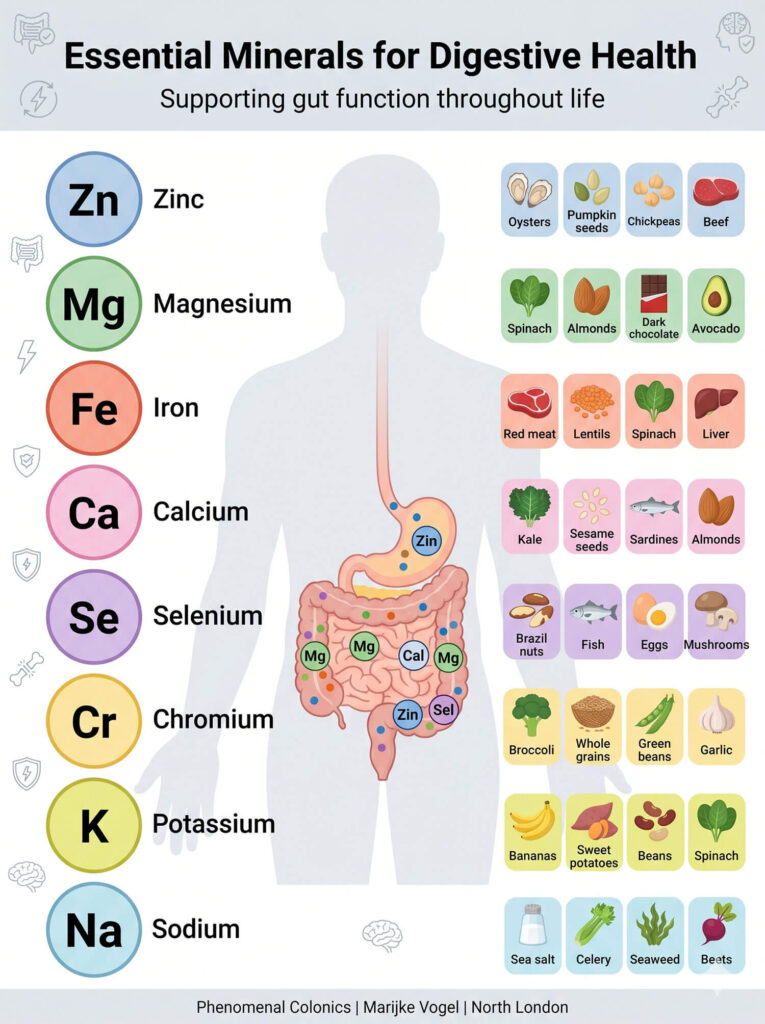
Magnesium — one of the most important minerals for nervous system regulation. Magnesium deficiency is extremely common and contributes directly to both poor sleep and poor bowel function. A good quality magnesium supplement taken in the evening supports muscle relaxation and nervous system calm.
5-HTP — a natural precursor to serotonin, which in turn supports melatonin production. Taking 5-HTP in the evening supports the body’s natural sleep-wake cycle without the dependency risks of pharmaceutical sleep aids.
Melatonin — a short course of melatonin can help reset a disrupted body clock. I recommend this as an occasional intervention rather than a long-term solution.
Colonic hydrotherapy — clearing accumulated gas, waste, and toxic burden from the colon often produces a noticeable improvement in sleep quality. Many clients report sleeping significantly better in the days following a colonic session. This is not coincidental — reducing the burden on the digestive system directly reduces the low-level nervous system activation that disrupts sleep.
Evening eating habits — aim to finish eating at least three hours before bed. Keep the evening meal light and easily digestible. Avoid alcohol, which disrupts sleep architecture even when it initially induces drowsiness.
Blackout curtains — light is one of the most powerful suppressors of melatonin production. Proper blackout in the bedroom makes a measurable difference to sleep depth and duration, particularly in summer months.
Meditation and breathwork — slowing the breath signals safety to the nervous system and activates the parasympathetic state needed for sleep. Even five minutes of slow breathing before bed makes a consistent difference.
When to Seek Further Support
If insomnia is persistent and significantly affecting your quality of life, please consult your GP. Naturopathic support works best alongside — not instead of — conventional medical assessment where sleep disruption is severe or long-standing.
If you would like to explore whether colonic hydrotherapy could support your sleep and digestive health, I would be happy to discuss this at a consultation.
Book a session at Phenomenal Colonics, Balance On The Lane, 16 England’s Lane, Belsize Park, London NW3 4TG — or contact me on +44 (0)7982 831239. WhatsApp is welcome.
About Marijke Vogel
Marijke Vogel is an ARCH and CNHC-accredited colon hydrotherapist and qualified naturopath, herbalist, and iridologist with over 25 years of clinical experience, practising at Balance On The Lane, 16 England’s Lane, Belsize Park, London NW3 4TG.
This content is for informational purposes only and does not constitute medical advice. Always consult your GP before beginning any new health treatment or if you are experiencing persistent sleep disruption.