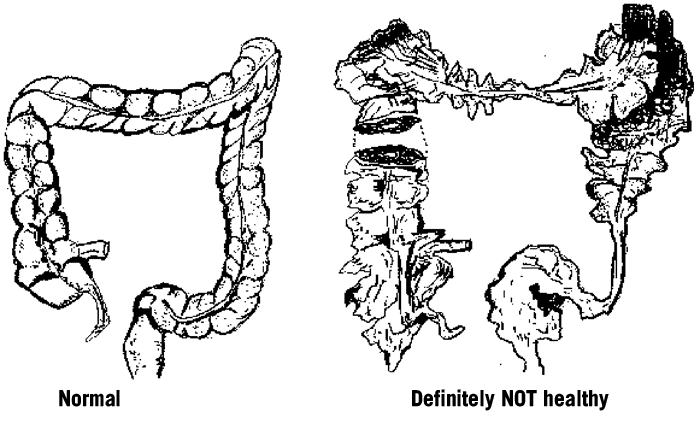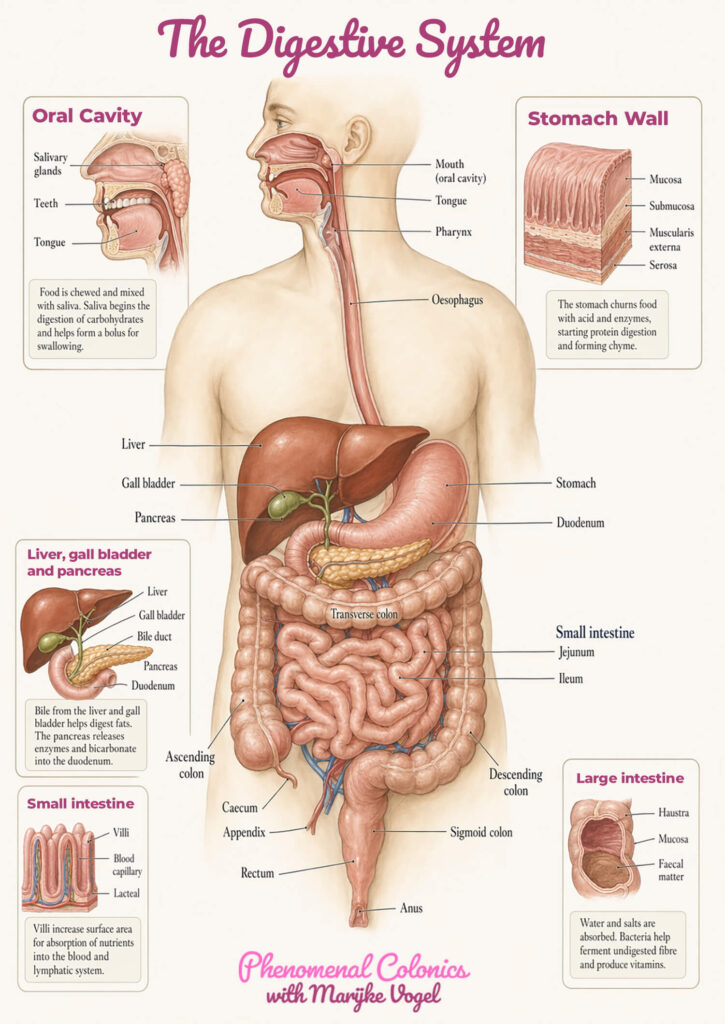

Gluten and digestive health are more closely linked than most people realise. In Marijke Vogel’s clinical experience at Phenomenal Colonics, gluten consistently worsens digestive symptoms more than any other dietary factor — more so than dairy or sugar, though she recommends limiting those too. This is the first in a three-part series on gluten, its effects on the gut, and what you can do about it.
How Gluten Affects Your Digestive System
It is becoming crystal clear that all health conditions worsen with the intake of gluten more so than with the other 2 villains, dairy and sugar although I do not encourage their use too much either.
Gluten causes significant digestive discomfort and gas. Furthermore, in sensitive individuals it can drive food matter upward through the oesophagus into the mouth and respiratory system. Marijke sees a growing number of clients presenting with these symptoms — and in most cases, reducing gluten intake makes a meaningful difference relatively quickly.
What to Eat Instead of Gluten
Rather than simply cutting foods out, Marijke recommends practical, accessible alternatives:
- Wheat, rye, spelt as well as oats and rice are all gluteneous so try to eat these less.
- Replace with millet, buckwheat and quinoa. Use almond flour, basmati or brown rice.
- Buy a bread maker and learn to make sourdough.
- Avoid cows milk and drink delicious, harmless almond milk. Soak your flakes with almond milk overnight and add some berries in the morning for a great start of the day.
- Get a juicer and make some fresh juice every day.
- An increase in energy and a reduction in bloating will be soon be your reward.
- Stop feeding your children soy and corn.
- Less pasta, most kids have pasta daily. Try buckwheat pasta.
- Don’t buy cheap ready made soups, full of fillers, binders and corn. Check your labels or make fresh.
Why It Matters
The connection between gluten and digestive health is well established — eating without thought paves the way for intolerance and pain within a few years. The NHS provides guidance on coeliac disease and gluten sensitivity for anyone who wants to understand the clinical picture more fully.
Don’t say:
“arghh I don’t believe in all that nonsense, what goes in comes out the other end”
“Who cares about organic or even GM”
“Why should we spend more money on organic”!
“It’s all fine”.
Unfortunately, sadly, millions of you have this attitude. Please get informed.
Private message to henpecked husbands wanting to eat better, but who’s wives think it’s all nonsense: Stand your ground and do your own shopping if needed. Many couples can live happily alongside each other, even when one turns vegetarian and the other remains carnivore. There should be mutual respect and understanding.
PS. Stay more alkaline.
If you are experiencing persistent bloating or digestive discomfort, book a session with Marijke or read the colonic irrigation FAQs first.